Travel app
A web app for a two-week trip through Albania, so family and friends at home could follow along.
 Live demoOpen the demoThe real app, running on a fake backend in your browser. Switch between the traveller and the follower view, post something, add a stamp. Nothing is saved or sent anywhere.
What it is
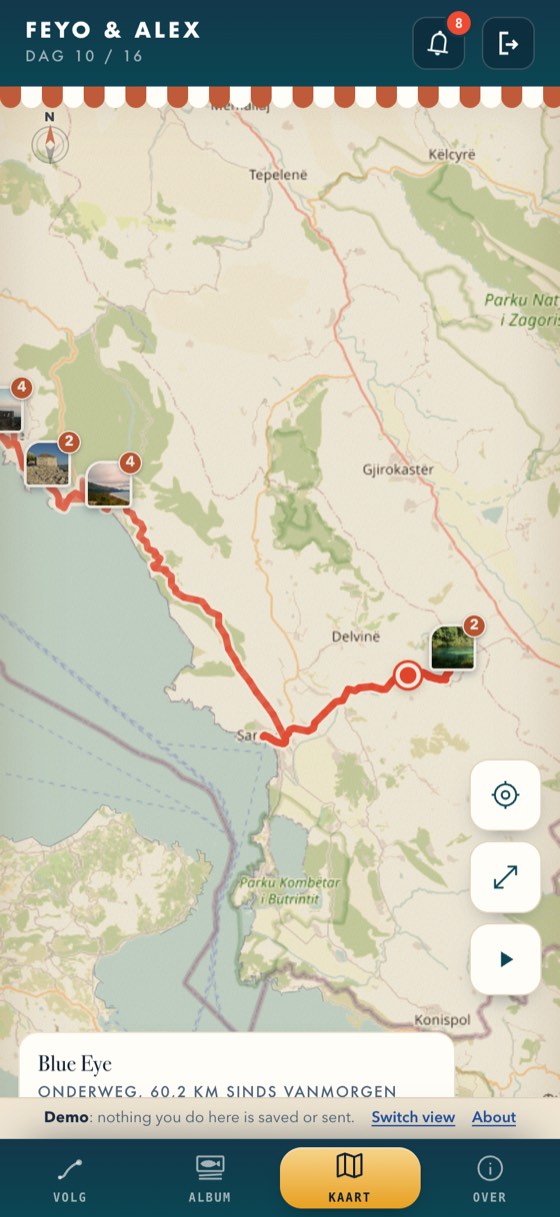
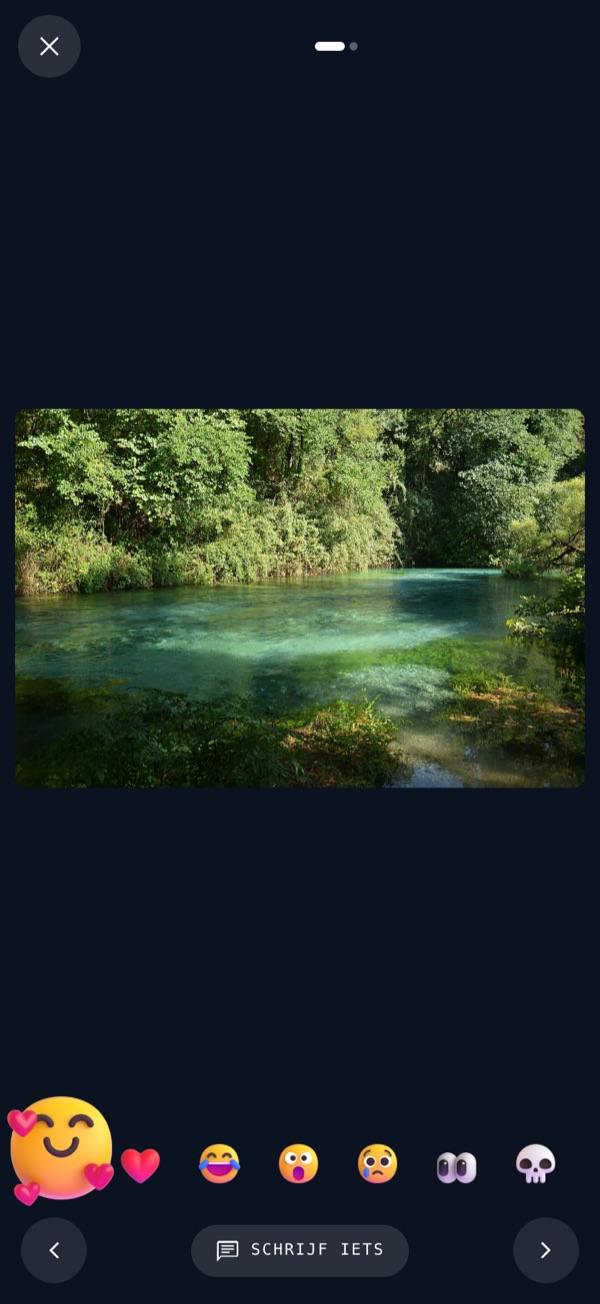
A live map with our GPS track, a timeline with posts and photos, stamps and notes from followers, a shared packing list, the day plan with bus times, and push notifications.
Two kinds of users: the travellers post, and family and friends follow along. Followers sign up with a name and their own code, and I let them in. The app was in daily use for the whole trip.
How it works
It is a progressive web app in plain JavaScript, installable on a phone. The data lives in Supabase (PostgreSQL) with row level security, photos and videos on my own server.
The GPS track comes from an open-source tracking app on my phone that posts each position straight into the database. A small service on my server sends the push notifications.
Highlights
- Works without signal: posts, photos and checkmarks go into an IndexedDB queue and send themselves when the phone is back online. Photos are stored as raw bytes, because iOS sometimes hands back an empty Blob from IndexedDB.
- Photos are scaled down to 1600 px in the browser before upload (about 250 kB instead of 4 MB, HEIC included). Place and time come from the EXIF data, read by my own parser.
- Videos are converted to web MP4 on the server, and the app shows a real progress bar until the file exists.
- Followers never see each other's codes: the guest table is closed, and database functions decide who may follow or react. You can only delete your own reactions.
- Live flight tracking on travel days, from two free sources that work straight from the browser.
What was hard
Supabase stops every answer at 1000 rows without an error. Halfway through the trip the map only showed the last few hours. A database function now thins the track (one point per 40 m) and returns it as one JSON value: sixteen days of pings, about 46,000 points, come back as about 6,000 points in 72 ms.
Posting from a beach without signal had three bugs, all hidden in the half second between "text sent" and "last photo linked". I only found them by making that moment artificially long in a test copy.
For this public demo I wrote a fake backend that answers the same API calls Supabase would, so the real app code runs without any private data.